
Oxley
Primary School
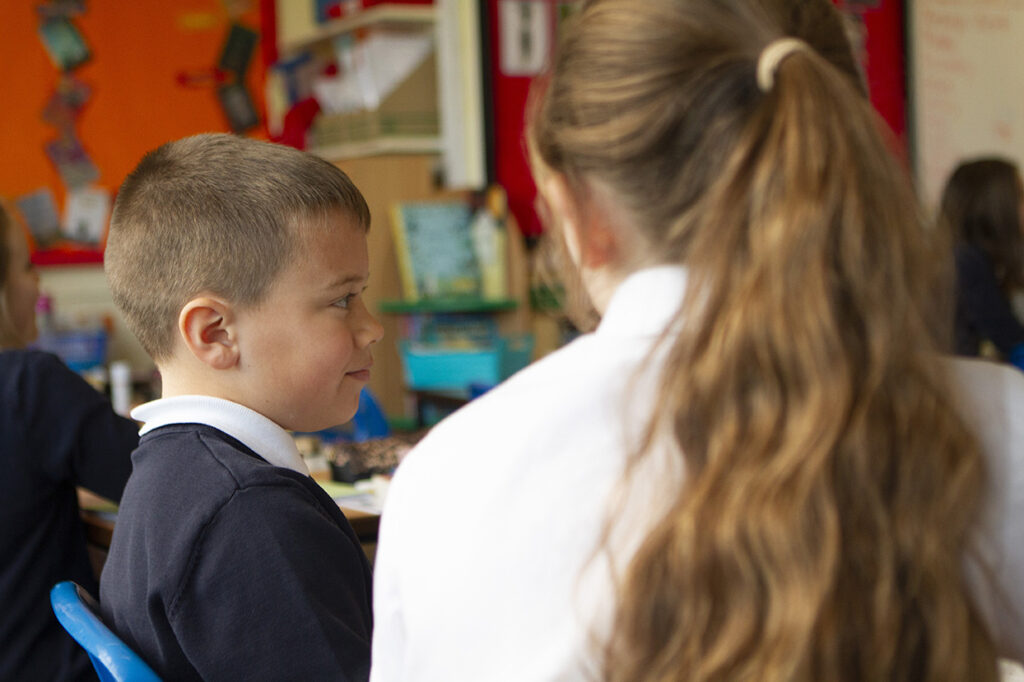
At our school, French lessons are fun, interactive and carefully planned to help children grow in confidence as language learners. We use games, songs, videos and interactive whiteboard activities, including audio recordings, so pupils hear and practise correct French pronunciation right from the start.
Each lesson has clear learning goals and links to engaging topics. Skills are built step by step, helping children develop their understanding gradually and securely over time.
Our French curriculum is built around three key areas:
Phonics (sounds in French)
Children learn how French sounds work through a carefully planned sequence of phonics lessons. They start by learning individual sounds, then practise them in familiar words, and later see them used in sentences and short texts. Each year group focuses on a new set of sounds, helping children build confidence and accuracy in pronunciation.
Vocabulary (words)
New words are introduced in a natural, enjoyable way, often through games, songs and speaking activities. As children move through the school, they are encouraged to remember, use and apply vocabulary in different contexts.
Grammar (how sentences are built)
In the early stages, children pick up grammar naturally through listening and speaking. As they progress, grammar is explained more clearly and explicitly, helping pupils understand how to form their own sentences in French.
Every French lesson gives children opportunities to practise:
Activities include whole-class games, paired speaking tasks and written work, with the level of challenge increasing as children move through the school. Extra practice activities are also available to help children consolidate their learning.
In the early years of learning French, there is a stronger focus on listening and speaking. As children grow in confidence, lessons become more balanced, with equal emphasis on all four skills.
Our aim is for children to enjoy learning French, develop a good ear for the language, and leave our school with the confidence and foundations needed for future language learning.